Life changed and you feel lost
A loss, a health setback, or an old hurt has left you feeling unlike yourself. You’re trying to make sense of what happened and figure out what you need now.
Maybe you’ve been betrayed, you’re carrying a loss, or you keep getting angry or shutting down with someone you love. I help you make sense of what’s coming up, reconnect with what you feel and need, and learn to trust yourself again.
I work primarily with men and also offer coaching for women and couples.
Rated 5.0 on GoogleNewport Beach, California, and online by arrangement.

A loss, a health setback, or an old hurt has left you feeling unlike yourself. You’re trying to make sense of what happened and figure out what you need now.
You snap, shut down, overthink, or put everyone else first. You may understand the pattern and still feel pulled into it when it matters.
You second-guess what you noticed, what you feel now, and whether you can trust your judgment about what comes next.
We start with what’s weighing on you, then slow down a moment that brings it into focus. For example, you might say, “I said ‘whatever you want.’ Then she made the decision and I got angry.”
Maybe part of you was exhausted and relieved she took the lead. Another part felt ashamed that you hadn’t spoken up. We’d explore both and see what fits your experience.
I might ask where you feel it in your body or how old you feel in that moment. If it brings up something familiar, we can explore it at your pace. Sometimes that means listening to the different parts of you that want different things.
Once you can hear yourself more clearly, you may realize you do have a preference, or that you need time to decide. That gives you something honest to say before resentment builds.
Being cheated on can leave you questioning your own judgment. You may be trying to decide whether to stay, wondering what you can trust, or struggling to say what you need now. In individual coaching, we can give those questions room and work toward boundaries and decisions you can stand behind.
The same work can help when you’re navigating a breakup or tired of losing your voice in the same argument.

Living with chronic leukemia and taking daily treatment for years changed how I think about uncertainty. Along the way, I’ve been through grief, betrayal, and periods when I felt far from myself. I know how much it matters to have somewhere you can be honest about what hurts.
For years I swung between trying to keep everyone happy and snapping when I felt pushed. I was afraid that if I said what I wanted, I’d end up alone. Therapy helped me understand a lot about myself. I was still learning how to be with what I felt in the moment.
In 2020, I snapped at my mom. I went upstairs and gave myself time to feel the anger. Underneath it, I found hurt and sadness. I thought about other times I’d felt that way, going back to when I was a kid, and I cried.
When I went downstairs, I thanked her, apologized, and hugged her. We both cried. I still think about that moment because feeling what was underneath the anger changed what I could say to someone I loved.
That experience shapes how I coach. I give you room to say what you usually keep to yourself, and we decide together how to explore it.
I draw on attachment theory to explore how earlier relationships may shape how you handle trust, closeness, and conflict today. My training includes NLP, Mental and Emotional Release, and hypnotherapy. Depending on what comes up and what you’re comfortable with, we may use guided reflection, body awareness, parts work, breathwork, or visualization.
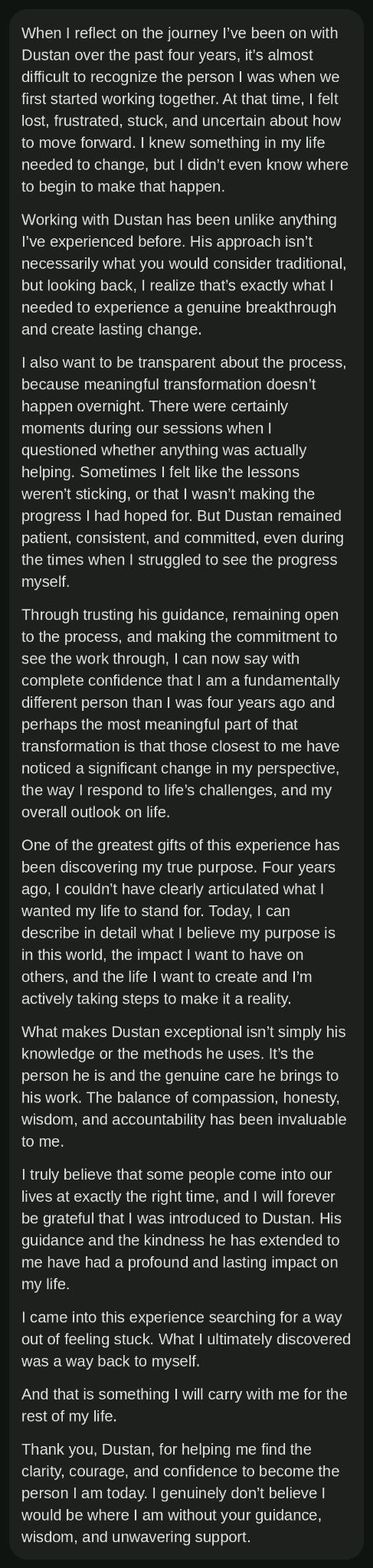
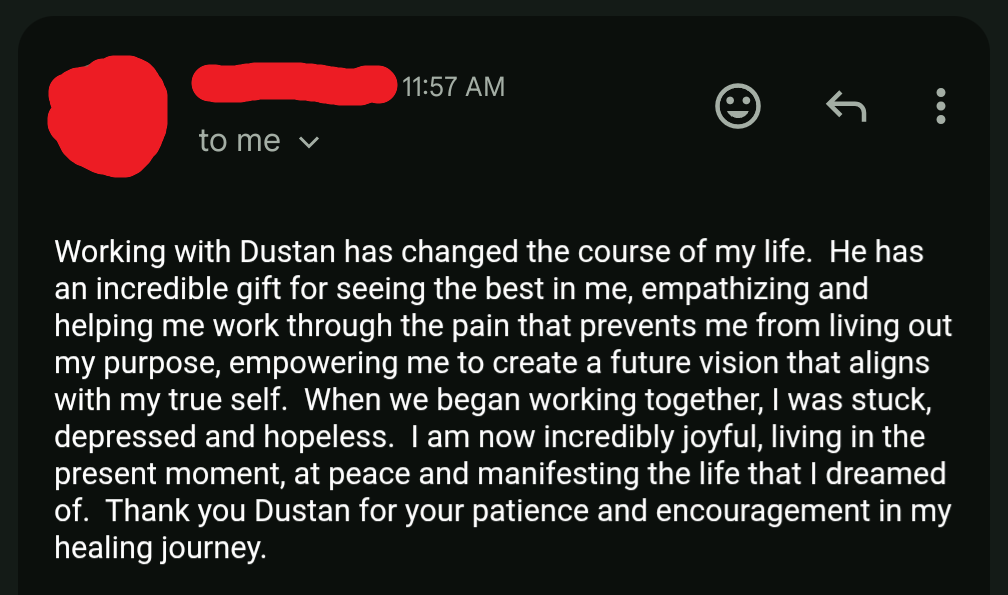
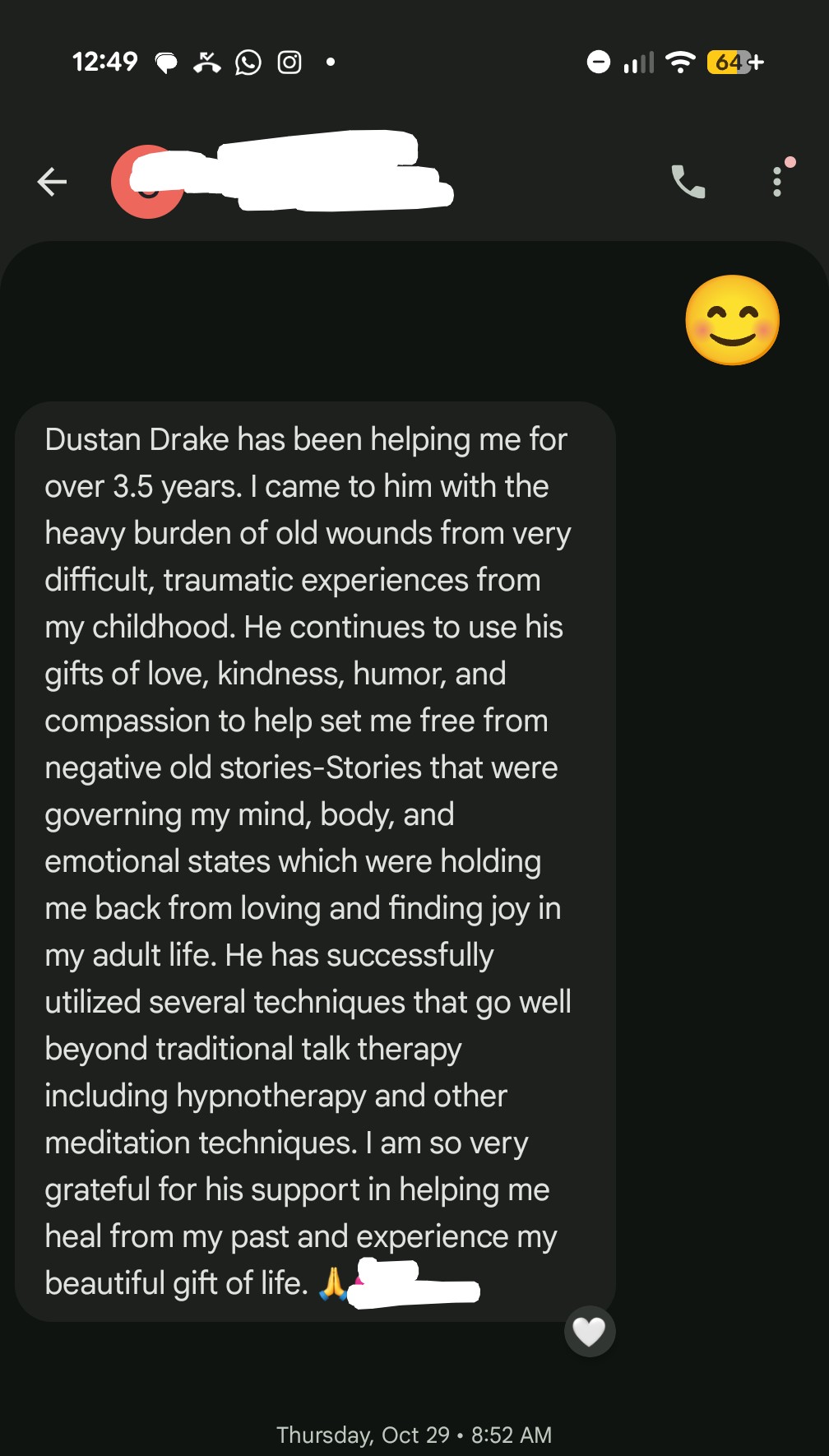
“He highlighted my biggest growth areas in our first few sessions and we worked together to create, build and envision an incredible future for my life.”
“My work with Dustan has left me much stronger, more self aware and calmer emotionally.”
“He allows you to make discoveries of yourself and also has SO many tools to help you improve.”
“Dustan’s coaching style is fun, informative and very caring!”
My practice focuses primarily on individual coaching for men. I also work with women and offer select sessions for couples. Individual sessions are typically 90 minutes, with 60-minute sessions also available. You can start with a single session or ask about three months of weekly individual coaching.
Tell me what’s been happening and what you want help with. The short application can lead to a complimentary 25-minute consultation so we can see if working together makes sense.
Apply for a free consultationTake a quick quiz to see how you tend to respond when you feel hurt. Get a practical step to try, plus the option to sign up for email resources.
Take the free quizYes. I primarily work with men, and I also offer individual coaching for women and select coaching sessions for couples. The consultation is a chance to talk about what you’re looking for and whether we’re a good fit.
Yes. Individual coaching focuses on your own responses and choices. Your partner doesn’t need to attend. If you’re looking for help working through a problem together, we can discuss which kind of support fits your situation.
You don’t have to decide before we meet. We can look at what matters to you, what you need, and what choices are available to you.
I’m a coach. Coaching supports personal growth and practical changes in how you respond. Licensed professionals provide psychotherapy, diagnosis, and mental health treatment. You can discuss with your therapist whether individual coaching would complement the work you’re doing together.
We start by talking about what’s happening in your life and what you want help with. We might stay with the conversation or slow down a specific moment and try an exercise together. We leave time at the end to talk about what you noticed and what you want to take into your life.
Yes. Tell me what you need that day. Sometimes the most useful thing is to talk through a decision, a difficult conversation, or something you haven’t had space to say out loud. A whole session can be conversational.
Most sessions include some kind of guided exercise when it fits. That might mean slowing down and noticing what you feel, trying a breathing exercise, or saying a boundary out loud. I’ll explain what I’m suggesting. You can ask questions, skip it, or stop at any point.
Spirituality is optional. If it matters to you, we can make room for it, including prayer if you want. The work can also stay focused on what you’re feeling, what’s happening in your relationships, and what you want to change.
Depending on what comes up, we might notice sensations in your body, explore different parts of you that want different things, or look at how earlier experiences still shape your reactions. I use attachment theory to help you make sense of patterns like seeking reassurance or pulling away when a conversation feels tense. I also draw on breathwork, guided visualization, NLP, Mental and Emotional Release, and sometimes hypnotherapy. We talk through what we notice and how it connects to what brought you in.
Most of the time you can keep your eyes open. I might invite you to close them during a guided exercise or hypnotherapy if you’re comfortable. Hypnotherapy is optional and something we discuss before trying. You can ask to pause or stop at any time.
We can start with what’s happening now. If a reaction feels familiar, we might explore where you learned it or what you needed back then. You decide how much you want to share, and we can stay with the present if that feels more useful.
If you feel overwhelmed, shut down, or stuck in your head, we might use breath, movement, posture, or a shift in focus to help you feel more grounded or energized. From there, we can look at the situation again and see what you notice or what choices feel available.
Individual sessions are typically 90 minutes. That gives us time to check in, do the work, and talk through what you’re taking away. I also offer 60-minute sessions if you’re short on time or working within a tighter budget.
Yes. You can start with one individual session. If you want consistent support, we can talk about the three-month option during the consultation.
Recording and use of AI for session summaries are optional and require your explicit permission. We discuss those choices before use.
Bring one thing you’re struggling with. We’ll talk through what you want help with and whether coaching is a good fit.
The short Calendly application will guide you to the appropriate next step.
Apply for a free consultation